

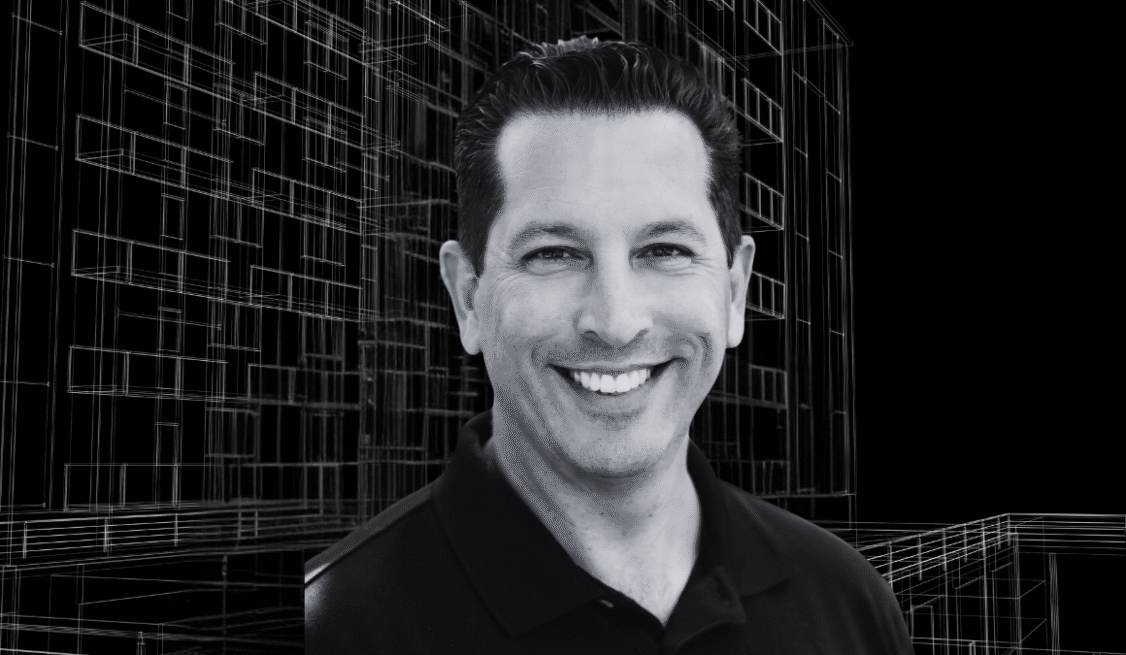
Most people who start a business in a trade spend their careers trying to grow out of it. More jobs, more crews, more service lines, more territory. Scale becomes the goal. The craft becomes the thing you used to do before you became a businessman.
David Michael Hargrove went the other direction.
Over 22 years in the roofing industry, he went deeper instead of wider. He became a certified installer of DaVinci composite slate. He mastered standing seam metal. He built specific expertise in historic home restoration across the Main Line’s pre-war housing stock. And when he founded Main Line Roofing Pros, he built a company structured around premium craft rather than volume.
Today he serves homeowners and commercial property owners across the Main Line, Delaware County, Montgomery County, Chester County, and Northern Delaware. He personally reviews every project estimate. He stays actively involved in the field. He calls customers back himself.
For the Success Blueprints audience, his story raises a question worth sitting with: what does it actually look like to build a business on depth rather than breadth? And what can a roofing contractor teach anyone who is serious about building something that lasts?
Growing Up in the Market He Would Eventually Serve
David is a lifelong resident of the Philadelphia suburbs. He did not arrive in this market as an outsider trying to learn it. He grew up inside it, which means he already understood the architectural character of the region’s homes, the specific demands of Pennsylvania’s four-season climate, and the expectations that Main Line homeowners have about the quality of work done on properties that represent the largest financial assets of their lives.
That context is not incidental to his success. It is foundational to it. A contractor who knows the difference between a Gladwyne stone colonial and a Havertown Cape Cod in terms of what each roof requires brings something to the first conversation that no amount of general training can replicate. Local knowledge compounds over decades. It becomes a competitive moat that new entrants to the market cannot easily cross.
His 22 years in the field gave him the technical depth. Growing up here gave him the cultural fluency. The combination is what allows him to describe his standard as the “Main Line standard” and have that mean something specific and verifiable to every homeowner he works with.
The Deliberate Choice to Stay in the Field
There is a common assumption in trade businesses that the goal is to eventually stop doing the work yourself. You hire people, you manage people, you become an administrator of the operation rather than a practitioner of the craft. Growth is measured by how many trucks are on the road and how far removed you are from the physical work.
David made a different choice. He stays personally involved in project estimates. He shows up in the field on complex jobs. He reviews the work before it is handed over to the homeowner. He did not build a management layer designed to put distance between him and the thing he built.
That is a genuine business decision, not a default. There are real trade-offs. Personal involvement limits the pace of scaling. It means your time remains finite in ways that a purely administrative model does not. But it also means something specific about the product the customer receives. When the founder is still checking the work, the standard is not theoretical. It is enforced by the person who set it.
His reasoning is straightforward: treating every homeowner like family requires transparent pricing, honest timelines, and uncompromising quality. Those three things are easy to put on a website. They are hard to maintain at scale when the person who cares about them most is no longer close enough to the work to see when they are slipping.
Why He Chose Premium Over Volume
The roofing market has two broad strategies available to any contractor. The first is volume: compete on price, maximize jobs per week, build efficiency systems that allow a large number of standard replacements to run through the operation with minimal friction. The second is premium: focus on the high end of the market, develop certifications in specialty materials, build expertise in the architectural categories where homeowners will pay for quality and expect it to show.
David chose the second. His certifications in DaVinci composite slate and standing seam metal are not entry-level credentials. They require technical training specific to those systems and represent a commitment to the portion of the market where material quality, installation precision, and aesthetic outcome matter more than the lowest bid.
That choice creates a specific kind of customer relationship. A homeowner deciding between natural slate, DaVinci composite, and architectural asphalt for a historic home in Villanova is not making a commodity decision. They are making a 30-to-50-year decision about an asset that has significant market value and architectural significance. The contractor they hire needs to understand all three options deeply enough to give honest advice about which one fits the structure, the HOA requirements, and the long-term economics of ownership.
David can have that conversation because he has done the work. He has not just read the spec sheets. He has installed the systems, stood behind them when things went wrong, and watched how they perform across Pennsylvania winters and summers over years of follow-up visits.
According to the Project Management Institute’s research on specialized expertise, professionals who develop deep specialty credentials consistently outperform generalists on both client satisfaction and project outcomes. The roofing industry reflects that pattern in concrete terms. Premium certification commands premium pricing. Premium pricing supports the margin required to do the job right. Doing the job right produces the reputation that sustains the business long after any individual marketing campaign has run its course.
Building Trust in an Industry That Has a Trust Problem
The home improvement industry broadly, and the roofing industry specifically, has a reputation problem rooted in real behavior. Storm chasers who show up after a weather event, collect deposits, and disappear. Contractors who quote one number and invoice another. Crews who use lower-grade materials than specified and hope the homeowner does not know enough to notice.
David built his business model as an explicit rejection of that pattern. Transparent pricing means the estimate explains how the number was derived. Honest timelines means the schedule he gives is the schedule he keeps. Uncompromising quality means there is no version of the job where those things are traded away for a better margin on a single project.
One of the most visible expressions of that commitment is the educational content he writes for homeowners. His guide to measuring roof squares teaches homeowners exactly how contractors calculate a roofing estimate, including the pitch multiplier math, the waste factor logic, and the bundle count for different shingle types. It gives every reader enough knowledge to check a contractor’s numbers before signing anything.
That is not what a contractor who profits from information asymmetry would publish. It is what a contractor who profits from trust would publish. The homeowner who reads that guide and then receives a David Hargrove estimate that matches the math exactly has a different experience of that transaction than any amount of positive review copy could produce.
As Edelman’s Trust research has documented across industries for decades, trust is built through demonstrated competence and perceived honest intent operating simultaneously. Technical expertise alone does not produce trust. Transparency alone does not produce trust. The combination of the two, which is what David’s model delivers, is what creates the kind of customer relationship that generates referrals without asking for them.
The Storm Damage Work: Advocacy at the Hardest Moment
One category of David’s work deserves specific attention because it illustrates something important about how he defines his role.
Storm damage restoration is not just a technical service. It is a navigational one. After a hail event or a significant wind storm, a homeowner faces a sequence of decisions that most people have never encountered before. Did the roof sustain damage? Is the damage severe enough to file a claim? What documentation does the insurance company require? How does the adjuster’s assessment get challenged if it is too low?
Most roofing contractors will replace a damaged roof. Fewer will help a homeowner understand the insurance process well enough to receive a fair settlement for the cost of doing it right. David does both. He conducts inspections specifically designed to document storm damage in the format insurance adjusters require. He advises on the claim process at each step. He has seen enough claim denials and lowball settlements to know exactly where homeowners lose money they are entitled to, and he positions his work to prevent that outcome.
That kind of advocacy is not billable by the hour. It is built into the relationship. And it is the kind of thing homeowners talk about when they recommend a contractor to a neighbor who just had a tree come through their garage roof in a February nor’easter.
The Classic Cars, the Baseball Diamond, and What They Say
David coaches youth baseball. He restores classic cars. These are not incidental biographical details. They are consistent expressions of the same disposition that defines how he approaches his professional work.
Classic car restoration is one of the most demanding hobby disciplines that exists. It requires patience across a long timeline where progress is often invisible for weeks at a time. It requires sourcing expertise across mechanical, electrical, and body systems that each have their own deep knowledge bases. It requires accepting that the process cannot be rushed without compromising the outcome. And it ultimately requires a standard of finish that is not negotiable because the car either looks right or it does not.
Youth baseball coaching adds a different dimension. Coaching young players requires the ability to explain the same fundamental correctly ten different ways until the one that works for that specific kid becomes clear. It requires patience with slow progress. It requires genuine investment in outcomes that benefit someone other than yourself. And it requires showing up consistently over a season-long process where the results of your work are visible to everyone on the field.
Both activities reflect a person who does not take shortcuts on things that matter to them, who finds genuine satisfaction in craft executed well, and who takes on commitments to other people seriously. That profile is visible in how he runs his business. It is not separate from it.
What the Success Blueprints Audience Can Take From This
David Hargrove did not build a technology company or raise venture capital. He built a roofing company in the Philadelphia suburbs, and he built it well enough that 22 years later, he is still the person reviewing estimates and showing up at job sites. For the right audience, that trajectory contains more practical instruction than most startup narratives manage to deliver.
A few things his career demonstrates clearly:
- Depth compounds in ways that breadth does not. Twenty-two years in one market, going progressively deeper into premium materials and specialty categories, produced a competitive position that is genuinely difficult to replicate. A contractor with two years of general experience and a marketing budget cannot do what David does on a historic Main Line home. That expertise is the moat.
- Positioning at the premium end of a market is a strategy, not an accident. Choosing DaVinci and standing seam metal over standard asphalt shingle volume was a deliberate decision that required certifications, investment in technical knowledge, and the willingness to turn down the low-bid jobs that did not fit the model. Premium positioning is available in almost every service industry. Most practitioners do not choose it because it requires more discipline upfront.
- Transparency in an opaque industry is a business model. Publishing a guide that teaches homeowners how to check a contractor’s math does not cost David business. It earns it. The homeowner who arrives at that estimate conversation already educated is more likely to hire the contractor who educated them, because trust has already been established before the first site visit.
- Founder involvement past the early stage is a choice worth making deliberately. There are businesses where the founder’s personal involvement is the product. Roofing is one of them. The decision to stay close to the work is not a failure to scale. It is a quality control mechanism that protects the reputation the entire business is built on.
- How you do anything is how you do everything. The same standard David applies to a roof installation shows up in how he coaches youth baseball and how he approaches a classic car restoration. That consistency is not incidental. It is character operating at full bandwidth, and it is visible to the people who work with him and for him in ways that no mission statement can substitute for.
For more profiles of builders, founders, and professionals who developed mastery the hard way, explore the Leadership and Education sections at Success Blueprints. The profile of Brian Vientos, who spent 17 years building his career from the ground up at Six Flags Great Adventure, covers similar territory from a different angle and is worth reading alongside this one.
David Michael Hargrove and Main Line Roofing Pros can be reached at (610) 334-3993 and at mainlineroofingpros.com.


